








Frank Land OBE FBCS, who died aged 97 on May 16 2026, was a prime mover in the story that took the world’s first business computer, Lyons’ legendary LEO, to early commercial success. He went on to become a leading academic, pioneering research and teaching in the new discipline of systems analysis at the London School of Economics from the late 1960s through to the present day.
Frank achieved all this as a young man despite the difficulties he faced as a Jewish refugee from Hitler’s Germany, arriving in England as a German-speaking 10 year old in 1939.
Frank started working with computers in 1952. He had joined J Lyons & Co, the well-known and enterprising catering company, as a trainee cost accountant in the firm’s statistics office after graduating from the London School of Economics (LSE) in 1950 with a degree in economics.
Lyons needed programmers to work on its new business systems and they sought to recruit them from within their own offices. Land was selected to join the handful of people working on the LEO (Lyons Electronic Office) project.
At the time, he had no idea that the company was pioneering the use of computers for business — but he and his colleagues in the small LEO team developed the world’s very first operational computer designed to handle business data.
This proved a fascinating, never-to-be forgotten time where the team broke fresh ground each day in bringing the LEO computer to work.
Land worked as a programmer and systems analyst and, as the LEO enterprise grew, he became involved in projects for a growing list of companies who were buying time on the Lyons computers, or acquiring their own LEOs – the likes of Ford, Smith & Nephew, Renolds Chains, Standard Motors, ICI, Durlachers and British Oxygen. By the mid 1960s he was one of the more senior members of the LEO team in charge of regional offices and subsequently acting as chief consultant.
Move into education
Two events then combined to change Land’s career direction.
First, in 1963, LEO Computers Limited — the fully-owned J Lyons subsidiary — was merged with the computer interests of the English Electric Company. Second, in 1967 the National Computing Centre offered grants to two universities to establish research and teaching facilities in the new discipline of systems analysis.
The London School of Economics, one of the successful bidders for the grants, offered Land the chance to head up the new activity and at the same time to manage their new computer services department. Frank jumped at the opportunity, particularly since the LSE already employed his wife Ailsa as a lecturer in operational research.
Frank’s work with systems at Lyons and with customers of LEO Computers had already convinced him of the importance of getting the understanding, knowledge and consent of the intended computer users if computers were to be deployed successfully. Now, he discovered the work of the socio-technical organisational behaviour specialists — in particular, the work of Enid Mumford at the Manchester Business School. Working with Mumford and John Hawgood, he helped to bring the notions of socio-technical design into wider acceptance. It became the basis of much of the teaching and research at LSE.
LSE became one of the first universities to offer graduate courses in information systems analysis and to initiate research into information systems and their impact on organisations. Frank became deeply involved in helping to define the nature of the subject and in setting down curricula for professional, undergraduate and graduate levels, working with organisations such as BCS and the Council for National Academic Awards, and helping to establish an international curriculum as a part of a project to establish standards by the International Federation for Information Processing (IFIP).
For you
Be part of something bigger, join BCS, The Chartered Institute for IT.
In 1975, Frank spent a year at the Wharton School, University of Pennsylvania, as a visiting professor in its Department of Decision Science in what was for him a very productive year.
In 1982 he became the first professor in information systems in the UK. He then spent more time abroad as a visiting professor in several Australian universities (Sydney University, NSW, Curtin University in Perth, Western University and, twice, at Bond University in Gold Coast Queensland), as well as at the Indian Institute for Management in Ahmedebad, India. In the meantime, together with Barbara Farbey and David Targett, he carried out a series of research projects studying the value added to an organisation from the use of computer-based information systems.
In 1986, Frank took up the chair of information management at the London Business School, retiring from full-time academic work in 1991. He returned to the LSE as emeritus professor in its Information Systems and Innovation Group.
Industry recognition internationally
During his career, Frank, a fellow of the British Computer Society, was twice appointed technical advisor to select committees of the House of Commons investigating the UK computer industry. Between 1984 and 1988 he was chairman of IFIP WG 8.2. In 1991, he received an honorary doctorate of science from what is now the University of East London and in 1992 he received the IFIP Outstanding Service award. In 2000 he was awarded a fellowship of the Association for Information Systems (AIS) and in 2003 the AIS LEO award for distinguished service to the discipline of information systems.
Latterly, in recognition of his services to the information systems industry, he was awarded an OBE in the late Queen’s Birthday Honours list of June, 2019.
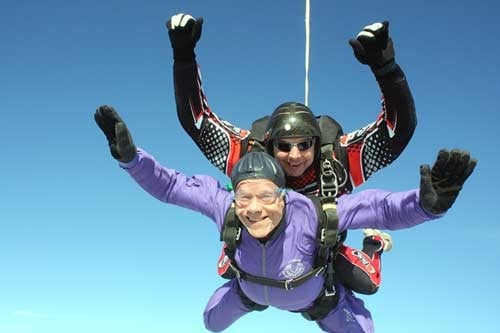
Frank always said that his career in computers owed everything to his early experience with LEO.
During his retirement he collaborated with fellow ex-LEO personnel David Caminer, Peter Hermon and John Aris in writing a book on the LEO story.
Subsequently, he worked tirelessly through the LEO Computers Society to keep the memory of LEO alive. His principal achievement in this enterprise has been the establishment of a comprehensive online database of LEO material that he called LEOpedia, developed in partnership with the Centre for Computing History in Cambridge.
Personal life
Frank, one of distinguished twin brothers, was born in Berlin on October 24 1928. He married Ailsa Dicken, who went on to become the LSE’s professor of operations research, in 1953. They had three children and seven grandchildren. Upon his and Ailsa’s retirement they moved to Totnes, Devon and Frank became chairman of his local parish in the Dartmoor National Park. Ailsa pre-deceased him in 2021, coincidentally on May 16 of that year.
Frank is survived by his twin brother, Ralph, his son Richard, and daughters Frances Place and Margi Knight along with seven grandchildren and four great-grandchildren with another on the way.
This obituary was kindly provided to BCS by LEO Computers Society and proofread for consistency by our in house team.