






Using their Digital Acumen ideas, the speakers lead an interactive analysis of today’s AI wave to expose an automation capability frontier
Speakers
Philip Greenwood
Mark Woodman
Agenda
6:00pm - Pre-event networking
6:30pm - Presentation and Workshop
8:00pm - Networking and refreshments
8:45pm - Event ends
Synopsis
This event will be run as part-presentation and mostly an interactive workshop. It is hard to keep up with the current rate of change of AI technologies and of the short- and-medium term consequences of change.
Leaders and change managers are finding it difficult to perceive any ‘big picture’, to consider any strategic view of ridiculously fast change, or to formulate any tactics or precautions to manage it.
Most people are now familiar with AI-based products like ChatGPT or Copilot but are unaware of the hundreds of LLMs accessible through APIs at the heart of most service offerings.
The headlines that shout about change madness and predict doom most often derive form newly capable LLMs and/or the autonomous AI agents that work with them, apparently towards objectives not explicitly set by humans. How should professionals, especially people whose work is based in organisations deal with this?
The workshop aims to propose a paradigm (a simplifying model) for reasoning about the automated future without pretending to predict it.
At Ipseita, we call this kind of reasoning “technosocial sensemaking”. We start with general ideas of technological advancement and the competency/cost function, then ask how human organisation changes when useful work becomes cheaper, easier, more competent or newly possible. Some ideas originate in the fast change in the industrial revolution of the 19th century.
The central proposition is that the most important long-term driver of change is the continual advance of the automation capability frontier. As technology changes the competence that can be deployed at a given cost, the organisation of human activity reorganises itself around the new possibilities. Politics, institutions, culture and business models all matter, but they are better understood as adaptive responses than as primary causes.
Our purpose is practical rather than theoretical or academic. If we can help develop a broadly correct thinking paradigm, it should assist individuals and organisations position themselves to prosper as the automation frontier continues to advance.
The event will start with a presentation of ideas to be used in the workshop. It will explore a proposition rather than expound a preferred paradigm and is best introduced as a question: As automation makes new capabilities dramatically cheaper, what should we organise differently?
Learning objectives:
- Be able to analyse fast-changing technology implications in terms of a bigger-picture perspective.
- Understand the implications of capability and cognition becoming cheap.
- Describe how to make sense of how traditional organisational activities will be automated.
- Visualise a new type of interaction between employees, customers and stakeholders with AI-powered organisations.
About the speakers
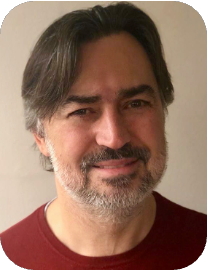 Philip Greenwood – founder & CEO of Ipseita, co-creator of Technosocial Sensemaking and the Digital Acumen concept courses; international consultant and systems developer. Co-creator of CAIA – Conversational AI Alignment – for purposeful, designed conversations, and Chief Engineer responsible for CAIA platform engineering, tooling, infrastructure and systems integration. Through four decades, Philip has built and deployed IT systems to implement organisational change.
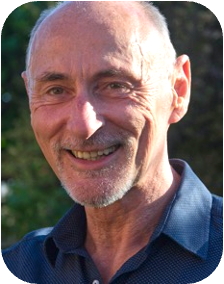 Mark Woodman – founder & CIO of Ipseita, co-creator of Technosocial Sensemaking and the Digital Acumen concept courses; emeritus Professor of IT and systems designer. Co-creator of CAIA for purposeful, designed conversations, and Design Lead responsible for tools and methods for CAIA conversation design and knowledge management systems. Mark is a CITP and was an academic through four decades, leading international standardisation, research & teaching projects receiving BCS IT Awards.
Our events are for adults aged 16 years and over.
This meeting is conducted in accordance with the BCS Code of Conduct for Meetings.
BCS is a membership organisation. If you enjoy this event, please consider joining BCS. You’ll be very welcome. You’ll receive access to many exclusive career development tools, an introduction to a thriving professional community and also help us Make IT Good For Society. Join BCS today
If you are attending in person, please familiarise yourself with the Visitor Instructions for the BCS London Office.
Please note, if you have any accessibility needs, please let us know via groups@bcs.uk, and we’ll work with you to make suitable arrangements.
BCS privacy notice: your data will be processed by BCS in accordance with our data privacy notice.
Photography: by attending this event, you may be photographed or filmed. Please speak to a member of staff if you do not wish to be included.
For overseas delegates who wish to attend the event, please note that BCS does not issue invitation letters.
This event is brought to you by: Business Change specialist group
Supported by: Consultancy specialist group