






A Zero Defects in the AI Era: Phillip Crosby’s Legacy for Modern Quality.
Speakers
Keynote: Niels Malotaux (Germany/Japan)
Keynote: Tom Gilb HonFBCS (Norway)
Professor Joseph Kasser (Australia)
Dr Larry Kennedy (USA)
Agenda
09:00 - Final Technical Tests for Speakers
09:30 - Opening Address – Margaret Ross, Raid AlQaisi
09:45 - Keynote: “Quality costs less. What are you going to do about it?” by Niels Malotaux
10:45 - Break
11:00 - “Zero Defects, Zero Lectures: AI Dialog as a Quality Instrument for Knowledge Work” by Joseph Kasser
12:00 - Lunch
12:45 - Panel Discussion “Reflections on Crosby’s Absolutes of Quality” by Tom Gilb, Niels Malotaux, Larry Kennedy, and Joseph Kasser
14:00 - Break
14:15 - “A Brief History About Quality and People” by Larry Kennedy
15:15 - Break
15:30 - Closing Keynote: “Design to Qualities” by Tom Gilb
16:30 - Closing Remarks – Raid AlQaisi, Margaret Ross
17:00 - Quality AGM
18:00 - End of AGM
Synopsis
Quality remains essential in the AI era: prevent defects, verify outcomes, and design for excellence.
Conference Overview: Free for both BCS Members and non-members.
Join global experts at the 33rd BCS Annual Online International Conference on Software Quality Management (SQM), bringing together practitioners, researchers, and thought leaders to explore how enduring quality principles remain vital in an AI-enabled world.
This year’s conference honours Philip Crosby’s legacy and examines how prevention, conformance, and zero-defect thinking continue to shape modern quality practice. The programme will explore how quality professionals can maintain trust, assurance, and human accountability while working with intelligent systems, automation, and data-driven decision-making.
Sessions will also consider the relationship between quality, ethics, and practical delivery in contemporary organisations.
Conference Themes:
- Quality by design and prevention.
- Zero defects and right-first-time thinking.
- Verification, trust, and assurance.
- Human judgment in intelligent systems.
- Quality, data, and ethics.
- Practical lessons for today’s professionals.
Why Attend?
This conference is designed for professionals who want to understand how classic quality principles apply to current challenges in AI, digital transformation, and service delivery. It offers a forum for insight, discussion, and practical examples from experienced speakers across the quality community.
Audience:
- Quality professionals.
- Software and systems practitioners.
- Managers and leaders.
- Academics and researchers.
- Students and early-career professionals.
Format: The conference will be held online, with keynote talks, presentations, and discussion sessions designed to encourage practical learning and exchange across the community.
Keynote: Quality costs less. What are you going to do about it? - Niels Malotaux (Germany/Japan)
As a student I wanted to earn some money to travel to Japan, and I ended up to work at the Quality Department of ITT in the Netherlands, where they made telephone exchange equipment. That was while Phil Crosby was Quality Manager at ITT. In his book ‘Quality is Free’, he describes that he distributed a 16-page booklet to every unit, explaining the definition of quality, about prevention, and the Zero-Defect concept. I found it, and apparently this completely inoculated me with the Quality is Free concepts.
When I now re-read his books ‘Quality is Free’ and ‘Quality without Tears’, it is as if he describes what I have been doing ever since: Taking quality seriously, keeping Zero Defects as a target, and delivering results that people need, on time.
I must admit that he also wrote of that booklet: “The results were amazing. No one paid the slightest bit of attention.”
Just like when I even mention Zero Defects, people, especially in software, are looking at me as if I’m coming from Mars. Because everybody knows that software without bugs is impossible, right? Wrong!
I must admit that initially I also didn’t believe it, until I tried. Having experienced it myself, I keep trying to help people delivering Quality on Time, as I know that, once people try, they’ll find out that it costs less, and creates happy developers and happy customers.
In this presentation I’ll show some background and examples. Finally, I will challenge you: “What will you do differently from tomorrow?” Or will you go back to work as usual?
Keynote: Design to Qualities - Tom Gilb HonFBCS (Norway)
Qualities are not about reducing defects. That is one bad tactic for improving one quality. Qualities, the many quality types, are best achieved by designing them into the system.
Zero Defects, Zero Lectures: AI Dialog as a Quality Instrument for Knowledge Work - Professor Joseph Kasser (Australia)
Philip Crosby's Quality Is Free (1979) reduced quality management to four uncompromising absolutes: (1) quality is conformance to requirements; (2) the system is prevention, not appraisal; (3) the performance standard is Zero Defects; and )4) the measurement is the Cost of Quality. This talk tests those four absolutes against what AI actually does in software and IT quality work today — not the marketing claims, but the mechanics of requirements review, predictive defect detection, closed-loop process control, and cross-system root-cause correlation.
The talk then turns the same lens on itself. This presentation was prepared through an extended AI dialog, and that dialog is presented as a live exhibit rather than a claim: the transcript shows a first, generic answer, a correction supplying the missing audience and context, and a refined result — the exact prevention-versus-appraisal pattern the talk's first half describes. Applying Crosby's own test to the method that built the talk produces an uncomfortable but useful finding: the gap was caught by review, after output existed, which is appraisal, not prevention. The cost of that gap was one turn of correction here — but the same gap in an unreviewed AI output could ship uncaught.
Attendees will leave with a working test — conformance, prevention versus appraisal, and cost of nonconformance — they can apply to any AI-assisted deliverable, not just a lecture, along with a concrete argument for where AI dialog genuinely accelerates knowledge work and where it cannot substitute for human judgment.
“Quality, People, and Process Ethics” - Dr Larry Kennedy (USA)
A review of the process ethics, QM methods, and systems thinking tools that provide the framework for ethical design, reliable hand-offs, and work process analysis.
About the speaker
Keynote: Niels Malotaux (Germany/Japan)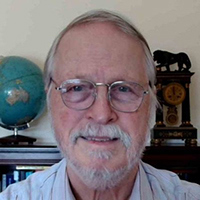 Niels Malotaux is an independent international Project Coach and expert in optimizing organizational, management, project, and team performance.He has some 45-year experience in designing electronic and software systems, at Philips Electronics, 20 years leading an electronic systems design company, and since 1998 helping projects to deliver Quality on Time: delivering the Right Results at the Right Time, enabling customer success.From time to time he still develops electronic products for clients, which allows him to understand the pitfalls of developers first hand.Since 2001 he taught and coached well over 400 projects and teams in 40+ organizations in the Netherlands, Belgium, China, Germany, Ireland, India, Israel, Japan, Poland, Romania, Serbia, South Africa, the UK and the US, which led to a wealth of experience in which approaches work better and which work less well in real practice.
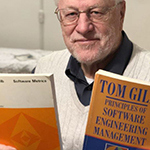
Keynote: Tom Gilb HonFBCS (Norway)
Tom Gilb was born in California 1940, lived in the UK 1956-58, Norway 1958 to present. Joined IBM 1958.
Consulted for a very wide variety of organisations, and managed to influence some of them in interesting and well documented ways. See ‘PPPP’ below.
Tom is an Honorary Fellow of BCS. See Gilb.com for more details. Tom is the author of thirteen paper books, dozens of E-books, and hundreds of papers on a wide variety of subjects. His book ‘Competitive Engineering’ is a substantial definition of systems engineering ideas. His works are at Researchgate All free, and https://leanpub.com/u/tomgilb (free samples)
Many BCS and other videos by Tom are at https://www.youtube.com/results?search_query=tom+gilb, and at the BCS SPA video site https://www.youtube.com/playlist?list=PLKBhokJ0qd3_wlvr0j85YhmNfNj8ZJ8M-
Tom has guest lectured at universities all over UK, Europe, China, India, USA, Korea – and has been a keynote speaker at dozens of technical conferences internationally.
There are very many organisations and individuals who use some or all of Gilb methods. IBM and HP were two early corporate adopters. Over the recent 20 years, 20,000 engineers at Intel have adopted his ‘Planguage’ requirements and design methods. Some case studies of the use of his methods are in ‘Powerful Ploys for Problems, using Planguage’, https://www.researchgate.net/publication/384054757_PPPP_Powerful_Ploys_for_Problems/, which includes an updated references section with free publications, up to 2024.
Tom is 85, retired, living in Norway. He follows up electronically daily, and his highest wish is to spread useful ideas to the next generation.
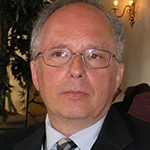
Professor Joseph Kasser (Australia)
Joseph is now a mentor and coach after having been a successful practicing systems engineer and project manager for almost 50 years and an academic for 20 years.
Joseph helps system engineers and project managers facing complex problems that are eating up their spare time and destroying their family relationships to successfully tackle those problems, restore their family relationships and create spare time in as little as 10 weeks.
Joseph is a recipient of NASA’s Manned Space Flight Awareness Award (Silver Snoopy) for performing and directing systems engineering, and many other awards and commendations.
The author of seven published books on systems engineering and more than 50 peer-reviewed journal and conference publications.
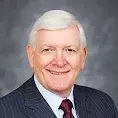
Dr Larry Kennedy (USA)
Larry is a skilled and experienced management professional with an inter-disciplinary history in engineering, business, and nonprofit development.
He has trained small business and nonprofit leaders for over thirty years and his emphasis on developing leadership skills dramatically increases the knowledge that learners apply to the workplace. He is the author and instructor of the Quality Manager Courses and has written two books on QM.
Larry has created online individual and cohort learning with Professional Certifications in Systems Engineering, Clinical Research, and Business and Nonprofit Leadership along with enterprise-level Quality Accelerator Programs.
QMI’s “Eight Attributes” have been adopted as “both a standard for performance and a standard for training that creates a positive quality management work culture” by the Site Accreditation and Standards Institute’s global standard for the Accrediting of Clinical Research Sites.
The Eight Attributes are also referenced in the International Council of Systems Engineering (INCOSE) Official Handbook sections for Quality Management.
Our events are for adults aged 16 years and over.
This meeting is conducted in accordance with the BCS Code of Conduct for Meetings.
BCS is a membership organisation. If you enjoy this event, please consider joining BCS. You’ll be very welcome. You’ll receive access to many exclusive career development tools, an introduction to a thriving professional community and also help us Make IT Good For Society. Join BCS today
Please note, if you have any accessibility needs, please let us know via groups@bcs.uk, and we’ll work with you to make suitable arrangements.
BCS privacy notice: your data will be processed by BCS in accordance with our data privacy notice.
Photography: by attending this event, you may be photographed or filmed. Please speak to a member of staff if you do not wish to be included.
This event is brought to you by: Quality specialist group
Supported by: Business Change specialist group, Dorset branch and Hampshire branch