







Working hours and benefits
6.1 Full-time and part-time working
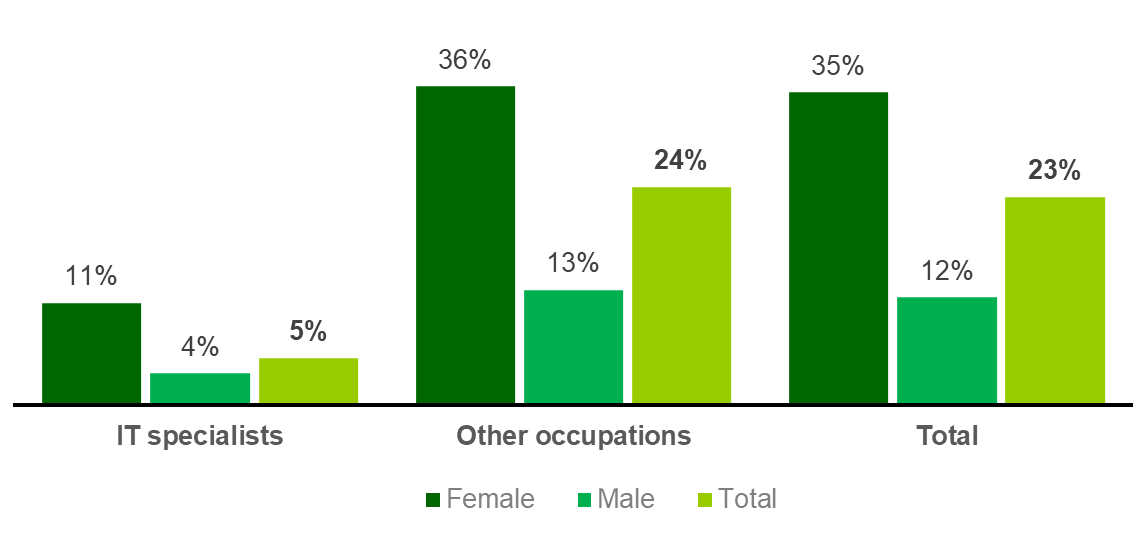
IT specialists in the UK are much less likely to work part-time than other workers and in 2025, just 5% were working part-time hours compared with 23% of workers as a whole. Female IT specialists were much more likely to be working part-time than males (11% of women in IT positions compared with just 4% of men), but part-time working amongst female IT specialists is very low compared with women in other occupations (36%).
As with other IT specialists/workers more generally, when asked why they were working part-time, the vast majority (87%) of women working in IT positions (during the 2021-25 period) stated that they were doing so as they did not want a full-time job (compared with 73% of all women in part-time work and 70% of male IT specialists working part-time).
INCIDENCE OF PART-TIME WORKING (2025)
Source: ONS Quarterly Labour Force Survey, analysis commissioned by BCS
6.2 Remuneration
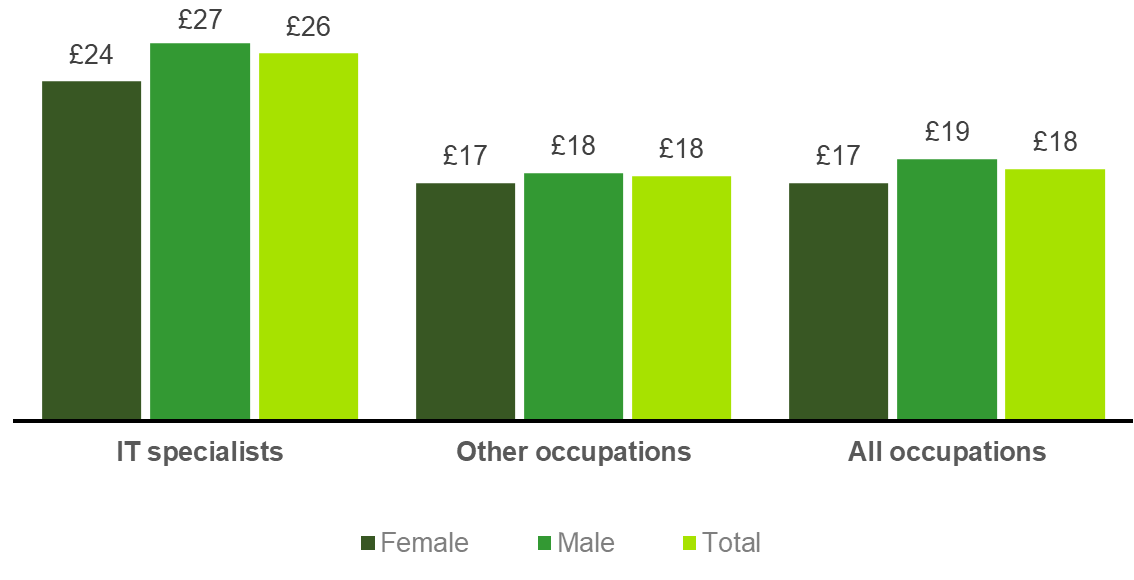
The median hourly earnings recorded for female IT specialists working as employees and on a full-time basis in 2025 was £24 per hour – a figure 10% lower than the male equivalent at that time.
Women working in IT positions do however earn substantially more than those employed in other jobs, and in 2025 the comparison figure for all female employees in full-time work was 30% lower at just £17 per hour4.
MEDIAN HOURLY EARNINGS OF FULL-TIME EMPLOYEES (2025)
Source: ONS Quarterly Labour Force Survey, analysis commissioned by BCS
6.3 Responsibility
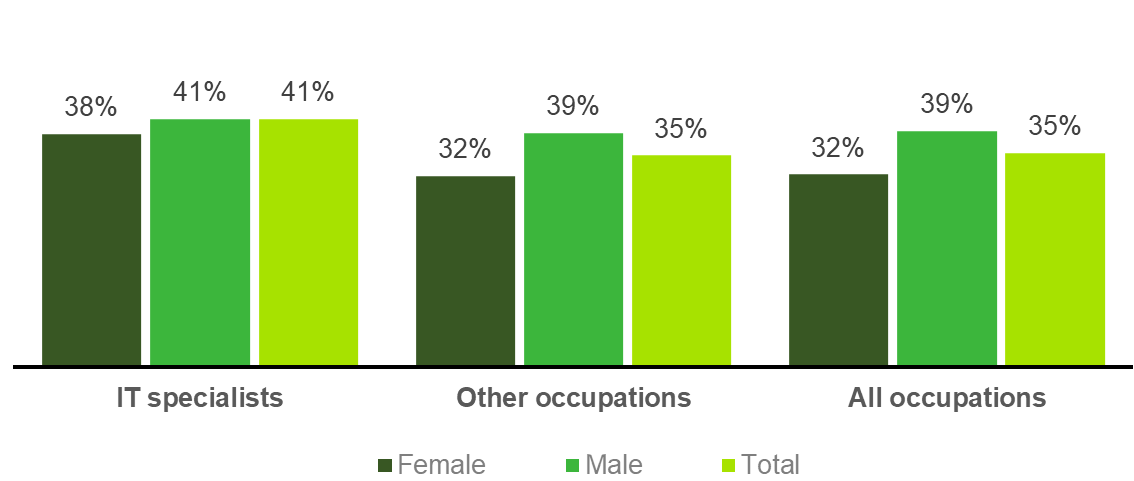
Using Managerial/supervisory status as a proxy for the likelihood that individuals are given responsibility within their work, it appears that during 2025, female IT specialists (that were employees) were less likely to be in ‘positions with responsibility’ than their male counterparts (38% vs 41%).
This was also true within the workforce as a whole where 32% of women were in ‘responsible positions’ compared with 39% of their male counterparts.
EMPLOYEES IN ‘RESPONSIBLE POSITIONS’ (2025)
Source: ONS Quarterly Labour Force Survey, analysis commissioned by BCS
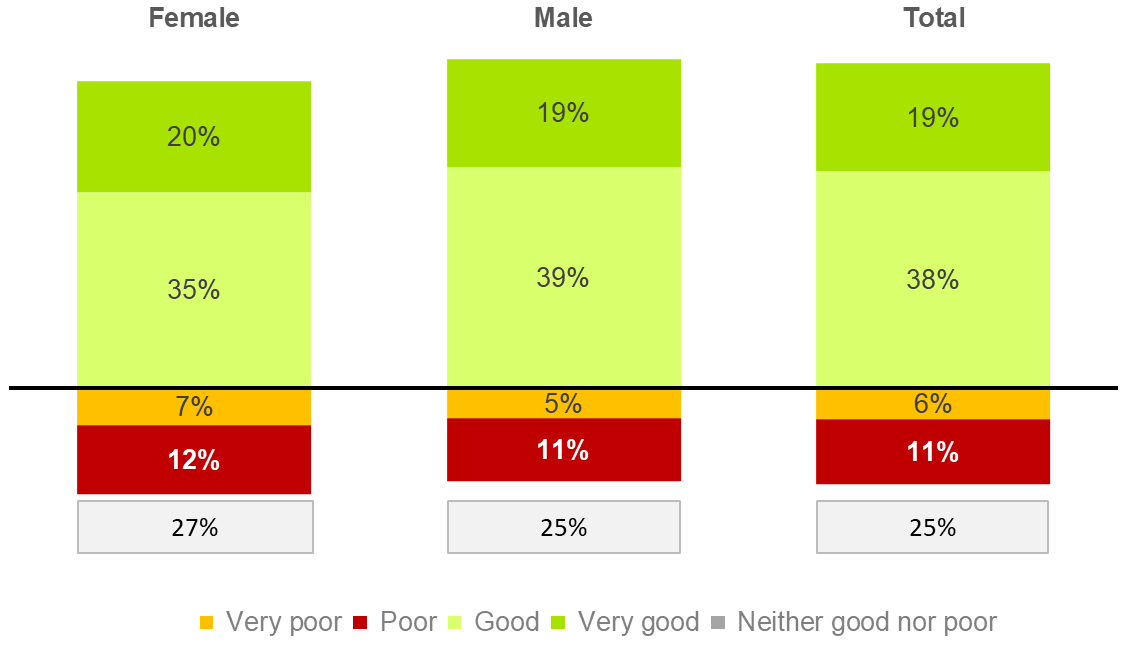
Female IT specialists also tended to give a slightly lower rating of how poor or good their managers were at involving them (employees / representatives) in decision making and in 20255, 19% stated that managers were poor/ very poor at this compared with 17% (rounded) of their male IT counterparts. For other occupations the reverse was true (22% of women vs 21% of men).
IT SPECIALIST VIEWS ON MANAGERS INVOLVING THEM IN DECISION MAKING (2025)
Source: ONS Quarterly Labour Force Survey, analysis commissioned by BCS