







Raising the standard: the case for responsible adoption - AI Skills and Adoption report
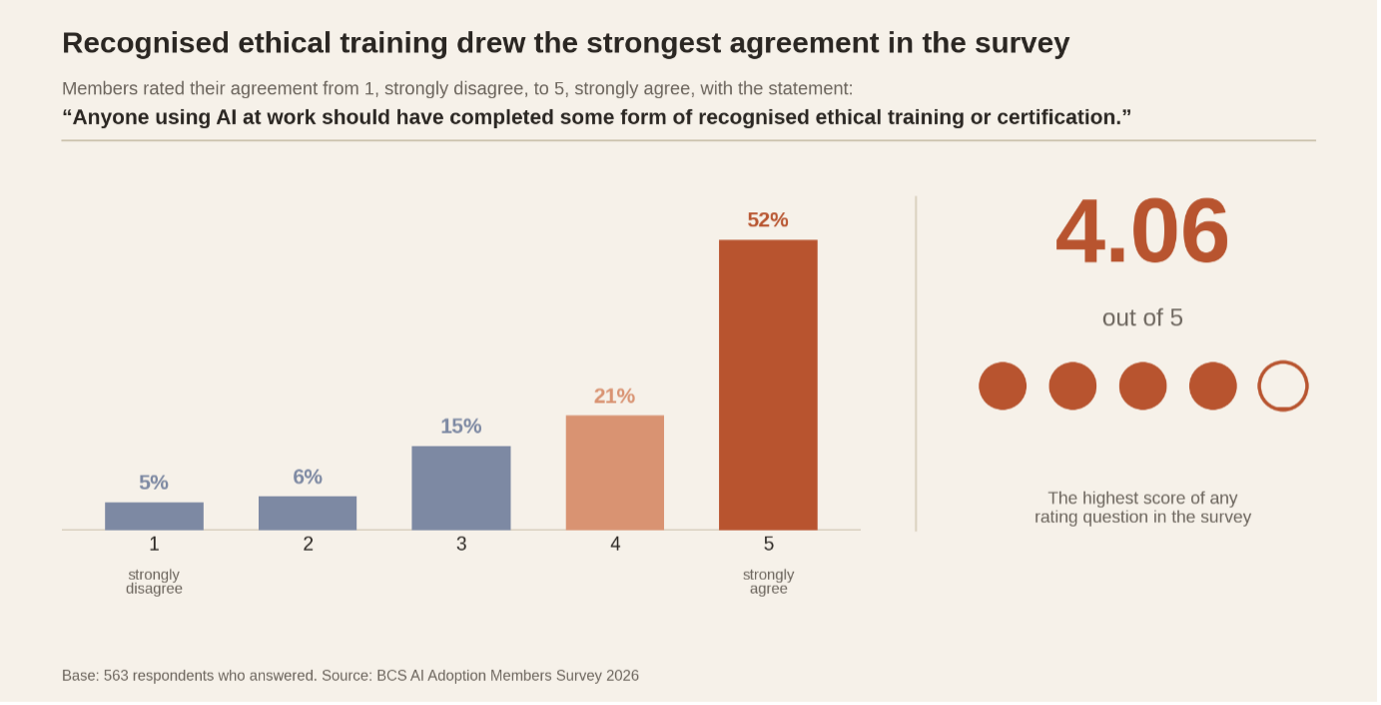
If there is one point on which tech professionals speak with near-unanimity, it is this: anyone using AI at work should have completed some form of recognised ethical training or certification. Asked how strongly they agreed, respondents averaged 4.06 out of 5, the highest score anywhere in the survey, with 52% expressing the strongest possible agreement and roughly three-quarters agreeing or strongly agreeing overall. The wording matters too because this is a call not for more training in general, but for recognised training — a shared, accountable standard, rather than the ad hoc, self-taught learning that, as we have seen, is too often currently the norm. It is the profession's own prescription for the problems this report has described.
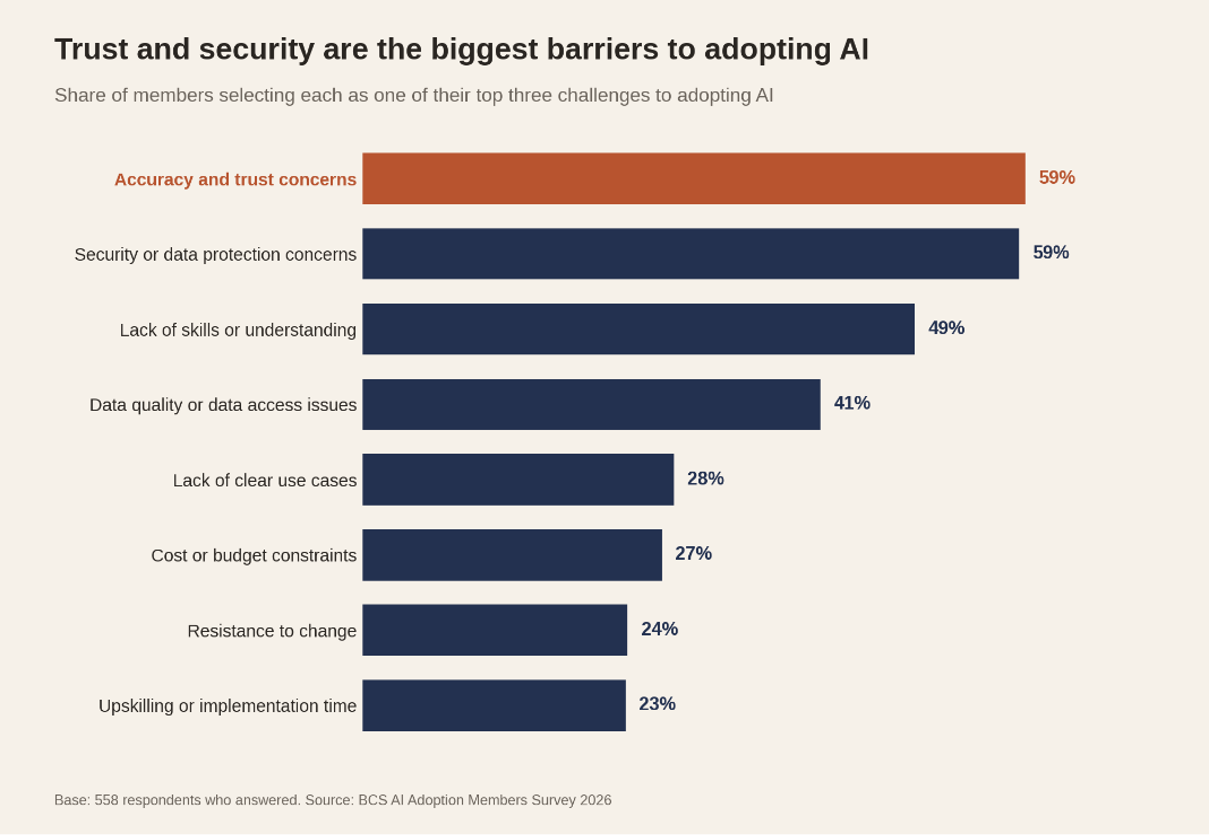
That prescription is a response to real and specific concerns. Asked what most challenges AI adoption, tech professionals pointed above all to accuracy and trust (59%) and to security and data protection (59%), followed by a lack of skills and understanding (49%) and worries about data quality and access (41%). These are the practical conditions on which safe, effective adoption depends, and on which, in their view, it is currently falling short.
The open responses our survey respondents wrote add a more sceptical edge. Alongside the practical barriers ran a clear strand of doubt about AI itself, often mirroring familiar concerns reflected throughout society: that AI itself is overhyped and immature, that it too often produces poor-quality output for unclear business value, that its environmental cost is significant and that it is being used in some organisations as cover for cutting jobs. Others raised the risk of becoming dependent on a small number of third-party providers, tools that could rise in price or be withdrawn. Underlying much of it was a sense that the whole field remains ungoverned. As one respondent put it, ‘best practice is non-existent, it's a wild west out there.’
Taken together, the two findings point the same way. Tech professionals are not against AI; overall they want it adopted, and adopted well. But they are telling us explicitly that the current environment lacks the standards, the oversight and the skills to make that happen safely. Their strong and consistent call for recognised training and certification is, in effect, a demand for a floor: a common, accountable baseline that everyone using AI can be held to. What that would take, from organisations and from government, is the subject of our conclusions.